Wayne iX Pay Terminal: Setup, Security & PCI Compliance
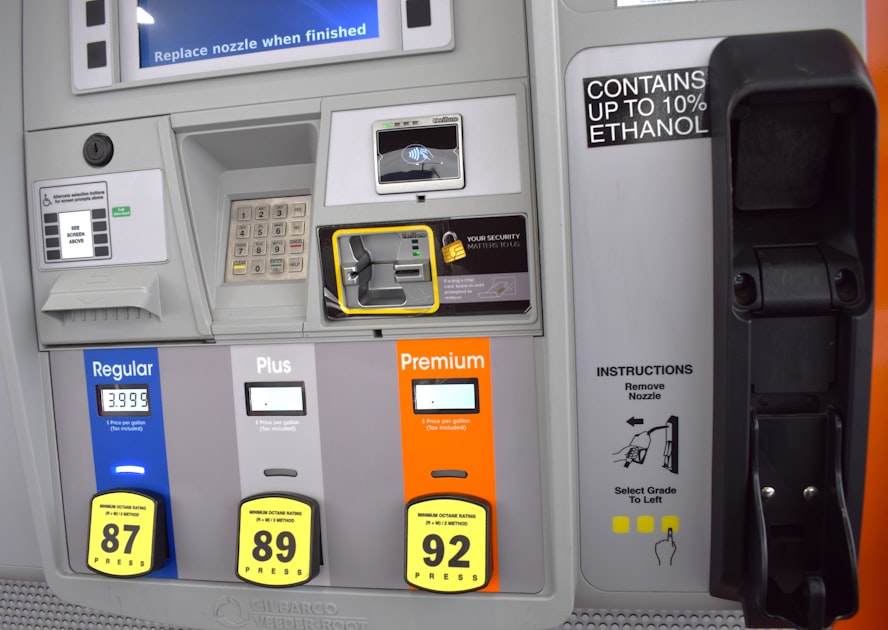
Beyond EMV: Getting the Most from Your Wayne iX Pay Terminal
Most gas station operators know the Wayne iX Pay terminal as the dispenser-mounted payment device that handles chip cards and contactless payments. But if your staff treats it like a set-it-and-forget-it device, you’re leaving significant security gaps—and potential liability—on the table.
This guide covers the operational depth that operators often miss: secure configuration, network segmentation, PCI DSS scope management, key injection procedures, and the maintenance routines that keep the iX Pay running reliably through high-volume fueling cycles. If you’re also running a Gilbarco Veeder-Root or Verifone environment at other sites, many of these principles apply, but the iX Pay has specific firmware architecture and configuration menus that require Wayne-specific procedures.
Wayne iX Pay Hardware Overview
The Dover Wayne iX Pay is a forecourt payment terminal designed for direct integration with Wayne Ovation and Helix dispenser platforms. Key hardware specifications operators should document for compliance records:
- Form factor: Weatherized, dispenser-mounted; rated for outdoor temperature extremes
- Card acceptance: EMV contact (chip), EMV contactless (NFC/tap), magnetic stripe (fallback only)
- PIN entry: Encrypted PIN pad (EPP) with ANSI X9.24 compliant DUKPT key management
- Display: Color touchscreen with consumer-facing prompts
- Certifications: PCI PTS (Point of Interaction) certified; confirm current PTS version with your distributor
- Connectivity: Ethernet; integrates with Wayne DOMS (Dispenser Operating Management System)
Before any configuration work, verify your iX Pay units are running current-approved firmware. Wayne periodically releases firmware updates that address security vulnerabilities—your distributor or Wayne service provider should have a notification process in place. Running outdated firmware is one of the most common findings during PCI forensic investigations at fuel retail sites.
PCI DSS Scope: Where the iX Pay Fits
Understanding how the Wayne iX Pay interacts with your overall PCI DSS compliance scope is critical, especially as PCI DSS v4.0 requirements phase in through March 2025 and beyond into 2026.
The Forecourt as a Cardholder Data Environment (CDE)
Each iX Pay terminal is a point of interaction (POI) device within your cardholder data environment. This means the network path from the terminal to your back-office system—whether you’re running Wayne’s back-office software or a third-party POS controller—must be treated as in-scope for PCI DSS. This includes:
- The dispenser controller board
- Any Ethernet switches connecting dispensers to the site controller
- The network segment between your forecourt and your inside POS
- Your site controller (often a Wayne DOMS controller or a compatible third-party system)
Network Segmentation Strategy
PCI DSS Requirement 1.3 mandates that you restrict inbound and outbound network traffic to only what is necessary. For a typical iX Pay installation, best practice is a dedicated VLAN for forecourt payment devices, isolated from your general store network, surveillance system, and any guest Wi-Fi. Flat networks—where everything from the coffee machine loyalty tablet to the dispenser terminals shares the same subnet—are a significant PCI finding and dramatically expand your compliance scope.
Work with your network installer to implement:
- Dedicated forecourt VLAN (separate from inside POS VLAN)
- Firewall rules that allow only necessary traffic between VLANs
- No direct internet access from the forecourt network segment
- Logging of all cross-VLAN traffic for review per PCI DSS Requirement 10
Key Injection and Cryptographic Management
One of the most misunderstood operational requirements for the iX Pay is encryption key management. Every payment terminal that handles cardholder data must use properly injected encryption keys—and those keys must be managed through a secure, auditable process.
How Key Injection Works
Wayne iX Pay terminals use DUKPT (Derived Unique Key Per Transaction) key management, which generates a unique encryption key for every transaction. The initial master key must be loaded at a Key Injection Facility (KIF)—a secure, PCI-approved environment. In practice, this typically happens at your distributor’s facility before terminal delivery, or through an authorized third-party KIF service.
What operators must never do:
- Attempt to inject keys in the field without proper KIF authorization
- Reuse keys across terminals
- Allow unverified technicians to access terminal internals
- Skip key re-injection after a terminal repair that required opening the secure module
If a terminal is returned from repair, verify with your service provider whether the tamper-evident seals were broken and whether key re-injection is required before returning it to service. Deploying a terminal with compromised or missing encryption keys creates direct liability under your payment processor agreement.
Physical Security Requirements
PCI DSS Requirement 9.9 (carried forward and expanded in v4.0 as Requirement 9.5) mandates physical inspection of POI devices to protect against skimming and tampering. For forecourt terminals like the Wayne iX Pay, this is especially critical—fuel dispensers are a primary target for skimming device installation.
Required Physical Inspection Routine
Implement a documented inspection process. At minimum:
| Inspection Item | Frequency | Who Performs |
|---|---|---|
| Visual check of card entry slot for overlay skimmers | Daily (each shift) | Cashier / shift lead |
| Verify tamper-evident seals on terminal housing | Weekly | Manager |
| Check dispenser cabinet locks are secure | Daily | Cashier / shift lead |
| Inspect keypad for overlay devices | Daily (each shift) | Cashier / shift lead |
| Photograph terminal serial numbers against inventory log | Quarterly | Manager |
| Full documented audit with sign-off | Annual | Owner / QSA |
Maintain a written or digital log of each inspection. In the event of a breach, your processor and card brands will request this documentation. Absence of inspection records is treated as a compliance failure regardless of whether a skimmer was actually found.
Dispenser Cabinet Security
The iX Pay terminal’s security is only as strong as the dispenser cabinet protecting the wiring behind it. Many older Wayne Ovation dispensers in the field use industry-standard “universal” locks that are widely available—meaning any technician, and any criminal with basic knowledge, can open the cabinet. Upgrading to high-security cylinder locks and auditing who holds dispenser keys is a low-cost, high-impact security improvement.
Consider installing tamper-detection sensors inside dispenser cabinets that trigger alerts at your POS controller. Some operators integrate these with their video surveillance system to capture footage any time a cabinet is opened outside of scheduled maintenance windows.
Contactless and Mobile Wallet Acceptance
The Wayne iX Pay supports NFC-based contactless payments, including Apple Pay, Google Pay, and tap-to-pay credit/debit cards. Contactless acceptance at the forecourt has grown significantly, and ensuring your NFC reader is active and properly configured is both a customer experience and a fraud management issue.
Contactless Configuration Checklist
- Confirm NFC antenna is enabled in DOMS configuration (not all installations enable it by default)
- Verify contactless transaction limits align with your processor’s requirements—many networks set a $100 contactless limit without PIN for fuel
- Test tap-to-pay with multiple device types (iOS, Android, physical contactless card) after any firmware update
- Ensure the contactless logo and consumer-facing prompt are clearly visible and not obscured by weathering or vandalism
Contactless transactions tokenize cardholder data at the device level, meaning the iX Pay never sees the actual PAN (Primary Account Number) in a contactless transaction. This reduces your PCI scope for those transactions, which is worth documenting in your SAQ (Self-Assessment Questionnaire) or ROC (Report on Compliance).
Integration with Inside POS Systems
The iX Pay doesn’t operate in isolation—it communicates with your site controller and inside POS environment. For stations running a mixed environment, understanding the integration points helps you troubleshoot payment failures and manage scope correctly.
Common Integration Configurations
Wayne iX Pay terminals typically integrate with:
- Wayne DOMS: Native integration; configuration managed through the DOMS interface
- Verifone Commander: Supported through certified interface; verify current certification status with your distributor
- Gilbarco Passport: Third-party integration; requires middleware layer in some configurations
- PDI / Pinnacle back-office: Communicates through site controller, not direct integration
When troubleshooting authorization failures at the iX Pay, always start at the site controller level before escalating to your processor. The majority of forecourt payment issues—declined cards, pump authorization timeouts, batch settlement failures—are configuration or connectivity issues at the site controller, not terminal-level problems.
For operators managing multiple brands of dispensers across a portfolio, understanding how Wayne iX Pay integrations differ from Gilbarco Veeder-Root’s Encore payment systems is important for your IT team. Fuel management systems that track site-wide data often aggregate payment and dispenser data, so integration architecture decisions affect your operational reporting as well as your compliance posture.
Penalties and Liability: What’s at Stake
Non-compliance with PCI DSS and payment network rules carries escalating consequences that fuel retailers often underestimate:
- PCI non-compliance fines: Payment processors can assess $5,000–$100,000 per month for merchants found non-compliant with PCI DSS requirements
- Card brand fines: Visa and Mastercard can levy fines of $5,000–$100,000 per month during the period of non-compliance following a breach investigation
- Fraud liability shift: If a fraudulent transaction occurs at a non-EMV-compliant terminal, liability shifts entirely to the merchant—not the issuing bank
- Forensic investigation costs: Following a breach, PCI Forensic Investigator (PFI) costs typically range from $15,000–$50,000 and are borne by the merchant
- Card replacement costs: Card brands can charge merchants $3–$10 per card that must be reissued following a breach tied to a specific merchant location
For a multi-dispenser site with high transaction volume, a single skimming incident can generate card replacement liability in the $50,000–$200,000 range before penalties and investigation costs are added. The physical security routines and network controls described above are not optional—they are direct loss prevention.
Operators who also manage compliance-heavy areas like UST monitoring and environmental compliance understand the cost-benefit calculation of documentation and routine: small investments in documented procedures protect against large, sudden liabilities.
Firmware and Software Update Management
Keeping iX Pay firmware current is a PCI DSS requirement under Requirement 6.3 (protecting all system components from known vulnerabilities). For fuel retailers, this is complicated by the fact that firmware updates on certified payment terminals must go through controlled processes—you can’t simply push an update like you would a desktop application.
Update Management Process
- Subscribe to Wayne/Dover security advisories through your distributor or directly through Dover’s support portal
- Review update release notes to understand what vulnerabilities or features are addressed
- Schedule updates during low-volume periods — terminal firmware updates typically require a brief service interruption per dispenser
- Test one terminal before fleet-wide deployment to identify any integration issues with your site controller version
- Document the update — record firmware version, update date, and technician name for your PCI evidence file
Many operators rely on their Wayne authorized service provider to manage firmware updates under a service contract. If you have this arrangement, confirm in writing that the service provider is responsible for monitoring and applying security patches, and that you receive documentation of updates performed. Don’t assume it’s happening without verification.
SAQ Type and Annual Validation
Most fuel retailers with iX Pay terminals in a properly configured, point-to-point encrypted (P2PE) environment qualify to complete a shorter PCI Self-Assessment Questionnaire. Specifically:
- SAQ P2PE: If your iX Pay installation uses a PCI-validated P2PE solution, you may qualify for this abbreviated SAQ (33 requirements vs. 300+ in SAQ D)
- SAQ C: For merchants with payment application systems connected to the internet but not storing cardholder data—common for many forecourt configurations
- SAQ D: Required if your configuration stores any cardholder data, or if your network architecture doesn’t meet segmentation requirements
Work with your payment processor and a Qualified Security Assessor (QSA) to determine which SAQ applies to your specific configuration. Getting this wrong—completing a simpler SAQ when your actual environment requires a more rigorous one—is itself a compliance violation and eliminates the protection that proper compliance affords.
For operators also navigating compliance documentation across multiple regulatory domains, having organized systems for tracking deadlines and evidence is essential. Multi-site management tools that centralize compliance tracking can help ensure PCI documentation doesn’t fall through the cracks alongside environmental and operational requirements.
Action Items: Wayne iX Pay Compliance Checklist
- Inventory all iX Pay terminals — document serial numbers, firmware versions, and installation dates
- Verify current firmware against Wayne’s latest approved version; schedule updates if behind
- Audit network architecture — confirm forecourt devices are on a segmented VLAN, not a flat network
- Implement documented daily and weekly physical inspection routines with signed logs
- Confirm high-security cabinet locks on all dispenser panels and audit key holder list
- Verify key injection status — contact your service provider for documentation of key injection records
- Test contactless acceptance on all terminals and confirm NFC is enabled and functional
- Determine your correct SAQ type with your processor or QSA and complete annual validation
- Subscribe to Dover Wayne security advisories through your distributor
- Review service contracts to confirm who is responsible for firmware patch management and obtain documentation
The Wayne iX Pay is a capable, well-engineered payment terminal—but its security depends entirely on how it’s configured, maintained, and monitored. Operators who treat it as a passive hardware component rather than an active compliance obligation are accepting risks that far exceed the cost of getting it right.